B1.1Turbine Aeroplanes
The mechanical pathway covers turbine aeroplane structures, powerplant, systems and maintenance practices. Key subjects include Level 3 objectives for mechanical certifying staff.
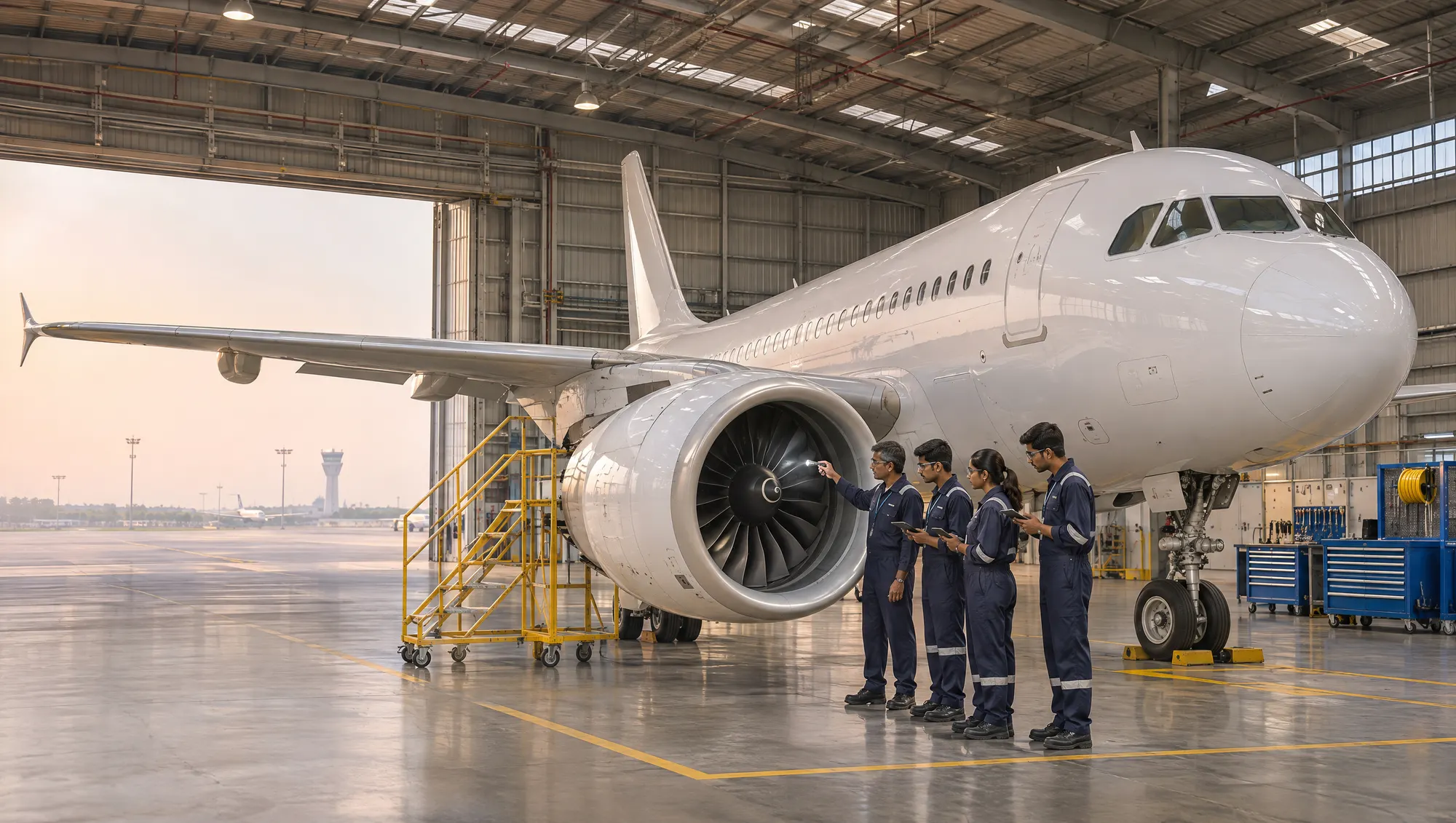
Start your aircraft maintenance training with B1.1 for turbine aeroplanes or B2 for avionics. Explore aircraft type training, specialized courses and ATO/A pilot training as your career develops.
AAA India presents the March 2026 integrated aircraft maintenance training plan, which offers full B1.1 and B2 basic courses, a standalone A1 basic course, and two modular routes from A1. Ask which courses and bridge routes are available within the delivering provider’s approval scope.
Enquire about basic training →The mechanical pathway covers turbine aeroplane structures, powerplant, systems and maintenance practices. Key subjects include Level 3 objectives for mechanical certifying staff.
The electrical and avionics pathway covers aircraft electrical and electronic systems, digital techniques and troubleshooting. Key avionics subjects include Level 3 objectives for avionics certifying staff.
A1 is the entry course for turbine aeroplane line maintenance mechanics. It is mechanically focused, with mostly Level 1 and 2 material and limited certification privileges. The March plan estimates 800–1,000 hours for full-time delivery.
Students complete the applicable modules, Part-66 knowledge examinations and practical assessments. The approved provider issues an A1 Certificate of Recognition (CoR) after successful course completion. The competent authority issues the A1 licence after the applicant meets the applicable licensing requirements.
The March plan estimates 6–10 months. The bridge covers higher-level material in turbine aeroplane aerodynamics, structures and systems (M11), propellers (M17), maintenance practices (M7) and gas turbine engines (M15). Knowledge levels vary by topic under Part-66 Appendix I. Practical work advances to mechanical systems and supervised troubleshooting.
The approved provider issues the B1.1 CoR when the applicable training, examination and practical assessment requirements are met.
The March plan estimates 8–12 months. The bridge covers the applicable higher-level content in electrical fundamentals (M3), electronic fundamentals (M4), digital techniques and electronic instrument systems (M5), aircraft aerodynamics, structures and systems (M13), and propulsion (M14). Relevant aircraft systems material from A1 can inform the gap analysis. Practical work focuses on electrical and avionics systems and troubleshooting in line with the applicable knowledge and assessment objectives.
The approved provider issues the B2 CoR when the applicable training, examination and practical assessment requirements are met.
The minimum duration for a complete basic course under Part-147 Appendix I is 800 hours for A1 and 2,400 hours each for B1.1 and B2. For an A1-to-B1.1 or A1-to-B2 route, the provider maps eligible prior learning against the target category and confirms the approved path, including remaining knowledge, examinations and practical assessments. As an illustration from the March plan, if all 1,000 hours of A1 training can count toward a 2,400-hour course, 1,400 hours remain. Actual credit depends on the approved pathway and the training already completed.
The March plan also outlines a modular schedule with A1 in 6–8 months, a B1.1 bridge in 8–10 months, or a B2 bridge in 10–12 months. It proposes full-time weekday A1 training and evening, weekend or block delivery for upgrades. Ask about the schedule, credit and approved course scope for your intake.
Training combines workshops, exposure to a working maintenance environment, supervised tasks and a practical logbook. Students follow standard operating procedures, record competencies, and develop troubleshooting, safety and human factors skills. Certified maintenance personnel supervise the work and assess progress. The March plan calls for at least 30% practical training as a planning figure, with each approved course meeting the applicable Part-147 training ratios and practical requirements.
Under Part-66 66.A.30, B1.1 and B2 applicants need two years of practical maintenance experience on operating aircraft if they complete an approved Part-147 basic course. The requirement is three years with skilled-worker training accepted by the competent authority, or five years without previous relevant technical training. Ask the competent authority which placements and logged tasks count toward basic experience. First aircraft type-rating on-the-job training has separate requirements where applicable.
The March 2026 plan proposes standalone A1, complete B1.1 and B2 courses, and both A1 bridge routes, with credit considered for common modules already passed. The plan assumes delivery within the provider’s current ratings. Confirm that the provider’s approval covers the course and route before booking.
The delivery plan retains the required knowledge levels, examination question counts, examination standards and practical elements. It calls for a training-hours matrix, knowledge-level mapping, examination integrity, secure question banks, authorised instructors and practical task tracking for authority review.
The plan uses A1 to offer an earlier and potentially lower-cost entry point, with staged progression into B1.1 or B2. It also calls for planning around the instructor qualifications and more complex examinations needed for higher-level modules.
References for course duration, knowledge levels, examinations and licensing include Regulation (EU) No 1321/2014, Annex III (Part-66), Annex IV (Part-147), and the associated Acceptable Means of Compliance and Guidance Material. See the rules for current module numbering, requirements and approval scope. EASA Easy Access Rules for Continuing Airworthiness ↗ · Consolidated EU regulation ↗
Build aircraft-specific mechanical or avionics knowledge through online theory and hands-on practical training on live aircraft.
Ask about CFM56 and IAE V2500 options.
Ask about options for the 737-600, -700, -800 and -900 with CFM56 engines.
Confirm your category, eligibility and intake.
Complete instruction and the required examinations.
Complete the practical element and assessment.
The approved provider issues the Certificate of Recognition upon successful completion, as applicable.
Confirm delivery format, practical location, course dates, provider approval scope and any licensing or on-the-job training requirements before booking. EASA type training guidance ↗
ATR 42 and ATR 72 type training ↓Proposed delivery with Bangkok Airways
Full EASA Part-147 type training courses cover the ATR 42-400/500/600 and ATR 72-212A/500/600 series with Pratt & Whitney PW120-family engines. Confirm the aircraft variant, course category and current approval scope with AAA India.
The proposed Bangkok Airways delivery includes classroom theory and invigilated examinations at its facilities under the approved provider’s off-site procedures.
Practical training and assessment can take place on Bangkok Airways’ operational ATR 42/72 fleet, supervised by the approved provider’s certified practical assessors, subject to aircraft access and the applicable approvals.
The approved training provider issues the applicable EASA Part-147 Certificate of Recognition to successful candidates. EASA Form 149 covers approved aircraft type training and its related examinations or an applicable aircraft type examination. Form 148 covers basic training or basic examinations.
The approved training provider would manage off-site training notifications and any required approvals with the Cyprus Department of Civil Aviation (DCA).
To support Bangkok Airways’ local approval process with the Civil Aviation Authority of Thailand (CAAT), the proposed package includes Maintenance Training Organisation Exposition (MTOE) excerpts, the course syllabus, the Training Needs Analysis (TNA) and instructor credentials.
The proposed contract between the training provider and Bangkok Airways is an Aircraft Maintenance Training Services Agreement and Service Level Agreement (SLA). The proposed scope and regulatory framework covers course categories and delivery, off-site procedures, practical aircraft access and assessments, certification, and support for Cyprus DCA and CAAT processes.
Explore initial and continuation courses, aircraft familiarisation and professional development.
Browse initial, continuation and aircraft familiarisation training for aviation personnel. Fees are listed in euros. Confirm the current price, taxes and availability before booking.
100 courses found
Course requirements depend on the role and the organisation’s approved training programme. B1 & B2 basic training ↑
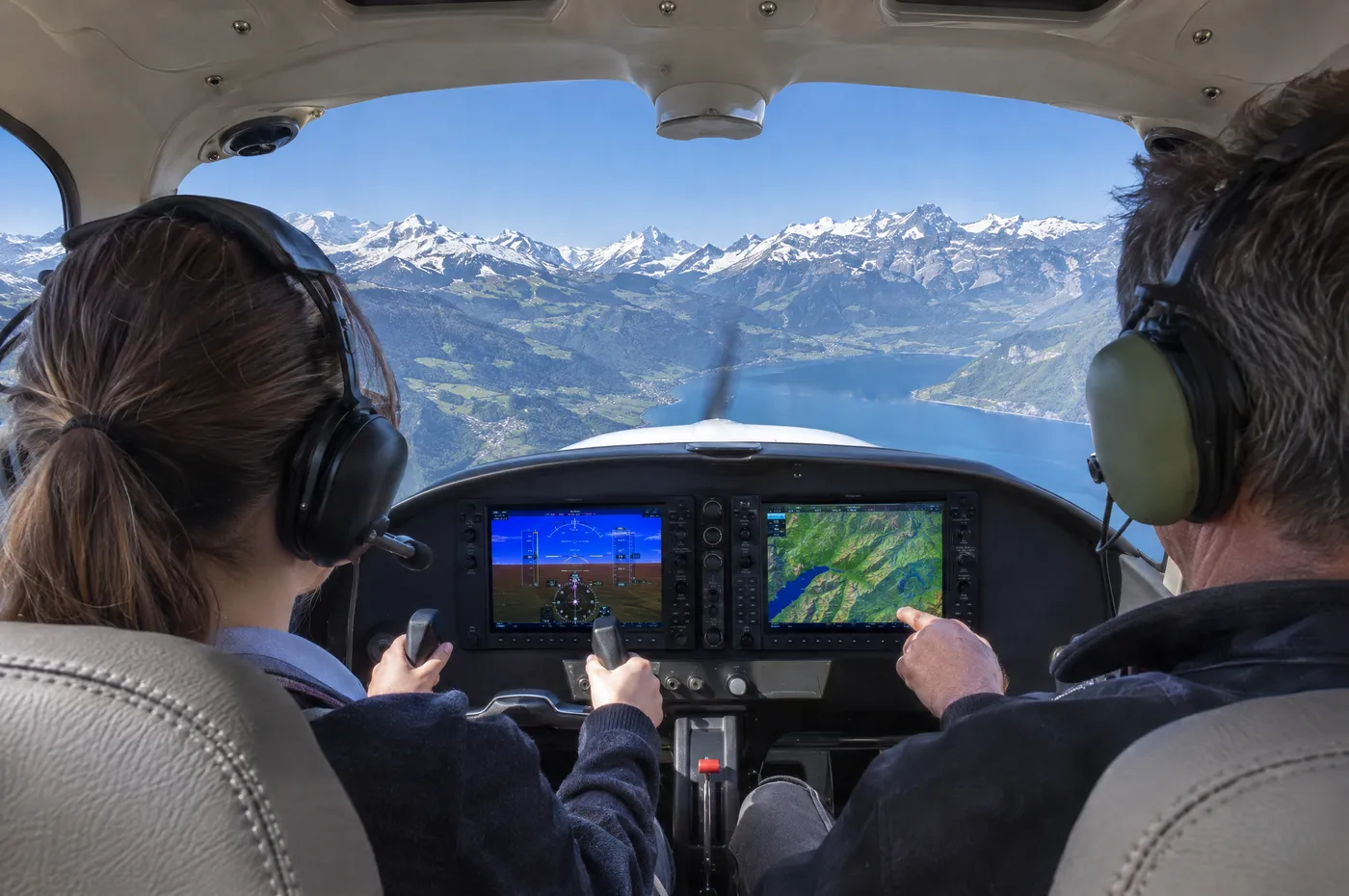
Start with LAPL(A) or PPL(A) and learn to fly under visual flight rules. Eligible PPL(A) holders can pursue instrument qualifications for operations under IFR, subject to rating privileges and applicable operating limits.
AAA India provides technical and mechanical management support and helps companies plan staff training, including organisations already operating under EASA approvals and those preparing to work under EASA regulations.
We work with EASA Part-147 maintenance training organisations, Part-145 maintenance providers and approved training organisations for aeroplanes and helicopters. Training availability depends on each provider’s approval scope.
Discuss your requirements →Share your current qualifications, the course you’re interested in and your preferred start date. For group training, include your company and the number of participants.
info@aaaeasa.com ↗